
Posted on 5th January, 2026 in Blog posts
Our Glorious Record on Slavery
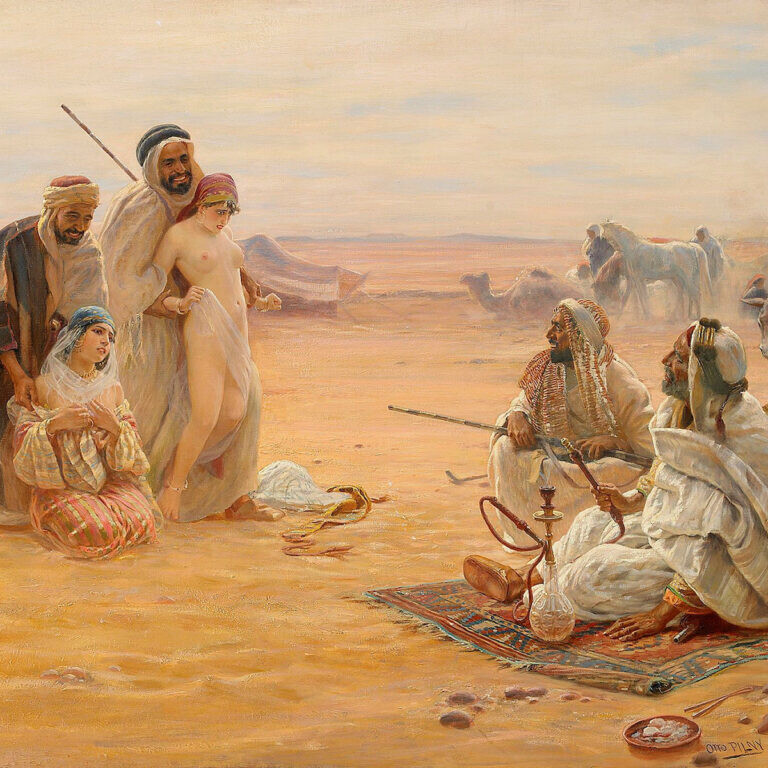
[adapted from WHO ARE WE? published by CamRivers in December 2024]
Of all the achievements of the British Empire, the epitome is our record on slavery. Of my forebears, I am particularly proud of the Kildare man who was active in the campaign against slavery.[1] He was a committed Anglican. The leading figures in the anti-slavery movement were mostly Anglicans, though the recent head of that church, Archbishop Welby, appears not to know this.[2] Agnostics or atheists, prominent thought leaders such as David Hume and John Stuart Mill, also excoriated slavery. Once the argument had been won in Parliament, we not only outlawed slavery at home but sought to close down a barbarous international industry which had been conducted by Arabs and Africans for thousands of years.
As soon as African rulers had enticed them into this lucrative business, unscrupulous Britons, as well as many other Europeans, joined in. From 1525 to 1866, 12.5m were transported to the Americas, and rather more went to Arab countries.[3] Why are the heirs of those enslaved in the Arab world not calling for reparations, as are those of the USA? Because there were no descendants. African slaves taken to Arab countries were all castrated so that they would leave no trace.[4] That slave trade was genocidal.
Today’s polemicists talk of slaves as if they were exclusively black, but for centuries, there were probably at least as many white slaves as black.[5] If reparations are to be paid to descendants of slaves transported to the USA, they should also be paid to those communities whose youths were seized in Europe and the Caucasus. More just would be to invest such resources in helping modern slaves. It is said that there are 200 million of them. Slavery is particularly prevalent in much of Africa, India and Russia.[6] It is managed mainly by Arab and African traders.[7]
After legal abolition in 1791, British authorities inaugurated an operation to suppress the trade worldwide, which lasted 150 years. Royal Navy patrols prevented shipments and rescued captives; taxpayers’ money was used to buy off British slave owners, Arab traders and African rulers alike, once they committed to ending the practice. They resisted, and so did the United States.
It has been claimed that the wealth of Britain was founded on slavery.[8] The reality is that it was insignificant to the development of the British economy.[9] Some families and places became rich from it, especially those which were compensated for lost business when forbidden to trade. However, the industrial revolution was not fuelled by the slave trade, nor even by exports. It came about because, long before the participation of a few Britons in the slave trade, Britain was wealthier and more welcoming to ingenuity and enterprise than anywhere else.[10]
[1] William de Burgh MP (1741-1808) see Dictionary of National Biography. Ferguson attributes the anti-slavery movement to the Clapham Sect in Ferguson, Niall (2012) Empire, How Britain Made the Modern World pp116-17.
[2] https://catholicherald.co.uk/the-ideological-error-of-welbys-100-million-fund-to-compensate-descendants-of-slavery/, accessed 060823. Two heroes of identity politics have curious résumés: Karl Marx’s writings reveal him as a racist who approved of slavery. Michel Foucault purchased and raped young children in poor countries. https://www.aljazeera.com/opinions/2021/4/16/reckoning-with-foucaults-sexual-abuse-of-boys-in-tunisia accessed 280224
[3] Different scholars give different figures, sometimes as high as 17 million before the 20th century. The Wikipedia entry suggests 11.5–15 million. Also see Thomas, Gordon (1990) Enslaved: Investigation into Modern-Day Slavery London: Bantam Press.
[4] https://www.fairplanet.org/dossier/beyond-slavery/forgotten-slavery-the-arab-muslim-slave-trade/, accessed 010523
[5] For an account of white slavery in the 18th century, see Milton, Giles (2005) White Gold: The Extraordinary Story of Thomas Pellow and North Africa’s One Million European Slaves London: Hodder & Stoughton
[6] https://www.ijmuk.org/modern-slavery-and-trafficking?gclid=EAIaIQobChMIleSJ45z0-gIVEu7tCh0vKAmoEAAYBCAAEgISKvD_BwE, accessed 221022. Also see Thomas, Gordon (1990) Enslaved: Investigation into Modern-Day Slavery.
[7] https://time.com/longform/african-slave-trade/, accessed 060823
[8] On this, see https://historyreclaimed.co.uk/did-slavery-make-britain-rich-decolonisation-and-progressive-masochism/, accessed 191122.
[9] Landes (1998) The Wealth and Poverty of Nations, pp119-20
[10] Dispassionately conveyed evidence is to be found in Biggar (2021) Colonialism: A Moral Reckoning, pp342 and 348.